cPanel authentication bypass exposes the growing risk of identity centric attacks
Why a single CVE highlights how attackers chain misconfigurations, identity weaknesses and automation to gain persistent access
Takeaways
- Authentication bypasses remain a high‑impact entry point. Even commodity vulnerabilities in widely used control panels like cPanel can enable account takeover, privilege escalation and follow‑on attacks when exposed to the internet.
- Identity failures amplify infrastructure risk. Misconfigurations, weak access controls and incomplete patching turn identity into the control plane attackers exploit — often faster than defenders expect.
- Attackers increasingly chain vulnerabilities with automation. From credential abuse to tooling powered by automation and AI, modern campaigns focus on speed, scale and persistence rather than novel exploits.
If you’ve ever managed a Linux web server — or relied on a hosting provider to do it for you — there’s a good chance you’ve crossed paths with cPanel. It sits quietly behind an enormous share of the web, handling files, databases, email, backups, and user access. Which is exactly why this latest vulnerability deserves more than a routine patch notice.
Tracked as CVE‑2026‑41940, the flaw is an authentication bypass in cPanel and WebHost Manager (WHM) that can let a remote, unauthenticated attacker gain administrative access through the login flow. Public reporting and vendor guidance indicate the issue affects supported versions after 11.40. It was patched on April 28, 2026.
From a risk perspective, this is close to a worst-case scenario: a privileged, internet-facing control plane with direct access to identities, configurations and data — and a flaw that sidesteps identity controls altogether.
What makes this incident particularly serious is timing. Public reporting indicates the flaw was exploited in the wild before disclosure, with some observed attempts dating back to late February. It is also fair to say the patching window will be uneven across hosting environments, especially where updates are pinned, delayed or operationally cumbersome.
Opportunistic ransomware campaigns
Two real-world examples make the point quickly. The first is the “Sorry” ransomware campaign.
Once public disclosure landed, exploitation appears to have gone industrial quickly. Reporting described a mass campaign using the flaw to breach servers and deploy a Linux ransomware strain known as “Sorry,” encrypting files and leaving ransom notes on compromised systems.
Reporting based on Shadowserver telemetry suggested that more than 40,000 IPs were likely compromised or involved in exploit activity during the wave of attacks. In shared hosting environments, even that rough order of magnitude points to a cascading risk problem: One breached management layer can expose large numbers of identities, applications and downstream tenants in a single move.
This wasn’t a precision attack. It was automated, repeatable and low effort — exactly what you’d expect when attackers find a way to step around identity controls at scale. Attacks like this become part of the internet’s background radiation; public exploit details and patching delays usually create a long tail of opportunistic follow-on abuse.
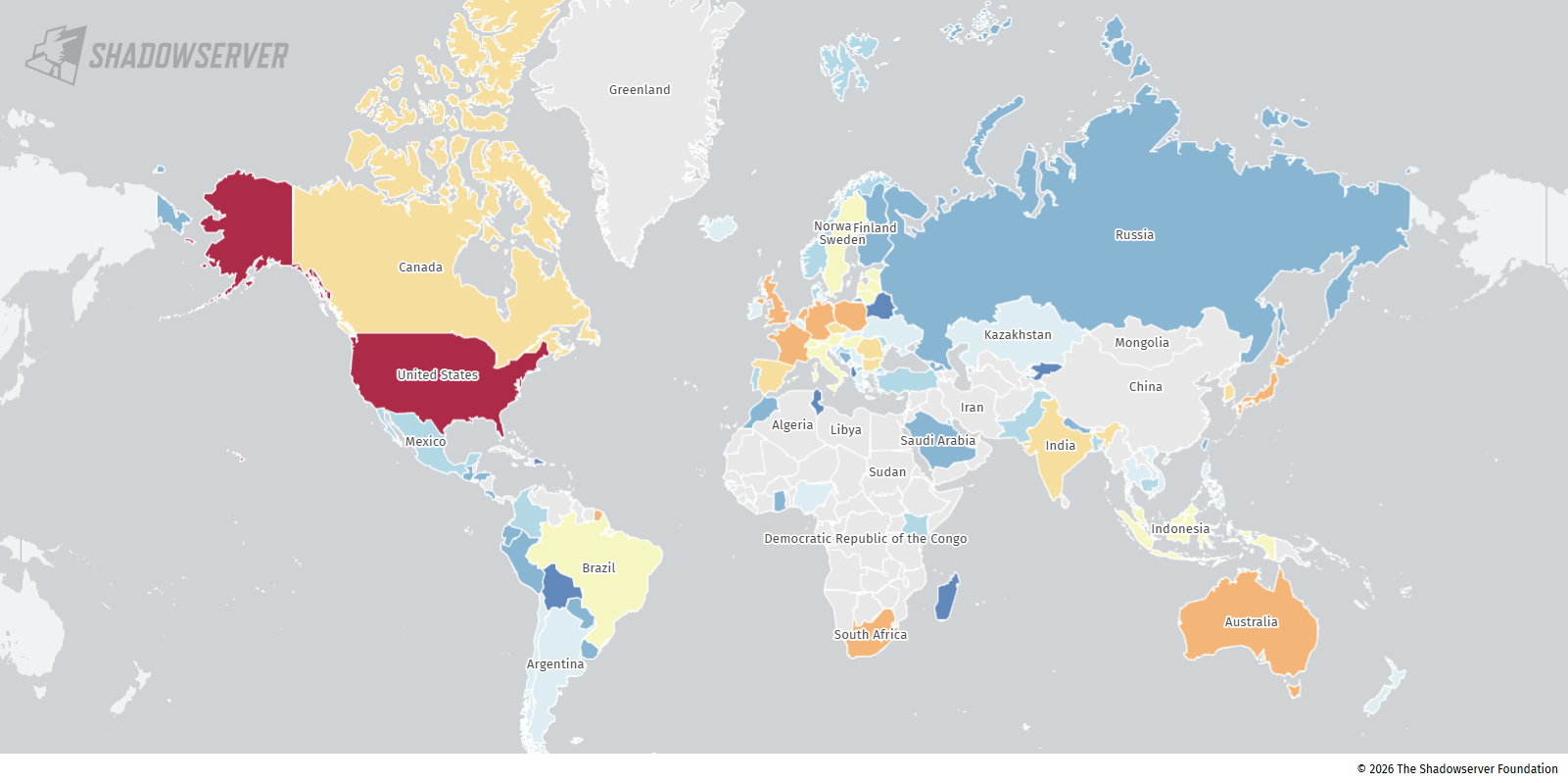
Countries with observed cPanel exploitation activity (CVE 2026 41940), The Shadowserver Foundation
Targeted attacks
Our second real‑world example is targeted exploitation against government and MSP infrastructure.
Alongside the ransomware activity, separate reporting described more targeted exploitation against government, military, managed service providers (MSPs), and hosting infrastructure in Southeast Asia and several other countries. In those cases, the cPanel authentication bypass was reported as an initial access vector that enabled broader follow-on intrusion activity.
The key takeaway isn’t attribution. It’s that a single identity-bypassing weakness enabled both broad, indiscriminate ransomware deployment and more targeted intrusion activity. That’s what high-impact exposure looks like in practice.
This isn’t just a cPanel problem
It’s tempting to treat incidents like this as isolated platform failures. I’ve seen the same reflex in the wake of the Vercel breach — including the familiar claim that the incident was especially bad because so many AI-built apps land there by default. But the more useful lesson is broader: Third-party Open Authorization (OAuth) integrations can quietly become bridges into core systems, and many organizations have far more of those bridges than they realize.
Nearly every company has some version of the same story — access granted quickly under time pressure, permissions left broad, cleanup deferred, and a low-drama identity path quietly turning into a high-impact one later. For example: Timmy required CRM access urgently, and he was given broad access to multiple systems to get him moving. The admin made a mental note to fix permissions next week and never got to it. Now Timmy’s account effectively holds the keys to the kingdom, and he has an unfortunate habit of clicking on things that sound too good to be true.
That’s not just a Vercel problem, a cPanel problem or an [insert-platform-here] problem. It’s a visibility problem. It’s an identity-hygiene problem. And it’s everywhere.
LLMs may be compressing the exploit “industrialization” window
One uncomfortable accelerant in incidents like this is the growing role of large language models in early exploit development. I’d frame this as compression rather than revolution: Large language models (LLMs) can reduce the time and expertise needed to enumerate attack paths, draft proof-of-concept logic and refine payloads, even if they don’t replace hands-on operator skill.
While I haven’t seen strong public evidence tying that dynamic specifically to this cPanel flaw, Marcus Hutchins’ research on Lazarus and AI-assisted attacker workflows offers a useful example of how generative AI is already being folded into real offensive tradecraft. It’s also an excellent Read-Only Friday read!
The shared security model may be quietly fraying
Incidents like cPanel and Vercel expose a deeper strain in the shared security model behind managed platforms. On paper, the division of responsibility is clean: Providers secure the platform, and customers secure what they build on top of it. In practice, identity sprawl, inherited trust and opaque dependencies blur those lines much faster than most organizations are prepared for.
When something goes wrong, teams struggle to answer basic but critical questions:
- Which identities had access?
- Which systems inherited trust implicitly?
- What data was exposed?
- How far could an attacker realistically move?
Those aren’t just operational details — they’re risk questions. And too often, managed platforms make them hard to answer with confidence, especially in smaller and shared hosting environments where visibility, logging and control can be uneven. Add data sovereignty and regulatory pressure to the mix, and it becomes easier to see why some organizations may start reevaluating whether convenience still outweighs control.
What defenders should revisit now: risk, identity and visibility
Incidents like cPanel shouldn’t be treated as isolated patching exercises. They’re signals that risk — especially identity-driven risk — is accumulating faster, and in more places, than many teams fully appreciate.
- Reframe vulnerabilities as risk indicators, not just technical events. Ask what a flaw exposes in terms of privileged access, inherited trust and downstream blast radius — especially across shared or managed environments.
- Make identity a first-class risk dimension. Long-lived tokens, service accounts, API keys, OAuth grants, and set-and-forget integrations now represent some of the highest-impact attack paths in modern environments. If you can’t clearly see them, you can’t accurately assess their risk.
- Demand visibility across connections, not just assets. Risk lives in how systems, identities and permissions interact over time. Defenders need a clear view of where risk is building, how exposure is trending and where blind spots exist before those gaps turn into incidents.
- Prioritize risk clarity over convenience. Managed platforms optimize for speed, but security teams need to optimize for understanding. The organizations that get this right don’t just respond faster — they make better, more defensible decisions about which risks are acceptable and which aren’t.
Bringing it back to outcomes
This is where a risk-driven approach matters. Teams don’t need more alerts; they need a unified, intelligible view of risk across identity, email, network, applications, data, and AI. The goal is to normalize severity, surface what matters most and translate technical exposure into business impact and trendlines leadership can actually use.
Update: and because it’s 2026, there’s more
As this post was being finalized, three additional vulnerabilities in cPanel and WHM were disclosed and patched, just days after the original authentication bypass was exploited at scale. The newly addressed issues include an arbitrary file read, arbitrary Perl code execution and a privilege‑escalation flaw — two of them rated high severity. The timing is hard to miss: A second emergency security release landed on a Friday, less than two weeks after the previous one. As explained in the linked article, seasoned operators will recognize the pattern. Major incidents trigger deeper audits, and those audits tend to surface more uncomfortable findings — rarely on a convenient schedule.
None of these newer vulnerabilities have been publicly confirmed as exploited in the wild at the time of writing. Still, in context, they reinforce the broader point of this post: When a highly privileged control plane breaks, the risk rarely stops at a single CVE. Adjacent code paths become interesting very quickly, and attack surfaces tend to reveal themselves in clusters rather than isolation. The lesson isn’t panic — it’s expectation management. This is what post‑incident reality often looks like in large, deeply embedded platforms.
Some weeks remind us that “have a good weekend” and “urgent security update” are not mutually exclusive statements.







Subscribe to the Barracuda Blog.
Sign up to receive threat spotlights, industry commentary, and more.