BYOS – in the cloud, security is a shared responsibility
Updated: Mar. 19, 2025
While 72% of the companies we recently surveyed understood the “shared responsibility” model, that meant more than a quarter of them did not. As the public cloud providers quickly gained momentum, it also became obvious that they could only provide security for their own infrastructure. This is the shared responsibility model: the cloud provider maintains the security of the cloud infrastructure while the customer is responsible for the security of what they’re running in that public cloud.
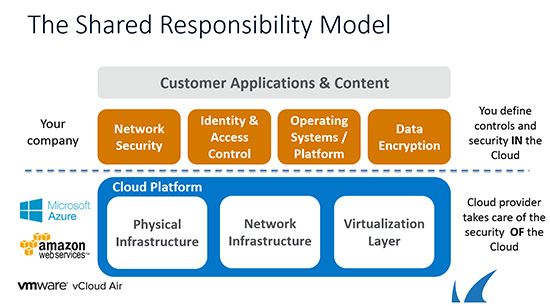
[clickToTweet tweet="BYOS - in a cloud scenario, do you understand what it means to “bring your own security?” Many companies didn’t." quote="BYOS – in a cloud scenario, do you understand the shared responsibility model that requires you to “bring your own security?” Many companies didn’t."]
How do they do that?
It’s simpler than it sounds: companies merely need to deploy cloud-based firewalls to protect network and application traffic that is running specifically for them in the cloud. A web application will typically require a web application firewall, a data center that was shifted to the cloud would rely on a network firewall. Barracuda offers two such products – the Barracuda Web Application Firewall and the Barracuda NextGen Firewall F-Series. Both are designed for in-cloud deployment whether you’re deploying in Azure, AWS, or vCloud-Air. Learn more at Barracuda.com, and register for a webinar to learn other statistics from our recent survey.





Search the blog


Subscribe to the Barracuda Blog.
Sign up to receive threat spotlights, industry commentary, and more.