How Elevate Technology Group helped restore connectivity after Oregon’s Holiday Farm Fire
A rural Oregon recovery story shows how secure connectivity, traffic prioritization, and automatic failover support community resilience.
Key takeaways
- Restore essential connections: Elevate Technology Group helped reconnect rural Oregon communities after wildfire disrupted communications.
- Keep critical services connected: Traffic prioritization and automatic failover helped support essential applications when connectivity was constrained.
- Build beyond the immediate recovery: The network continued supporting communities through later disruptions.
When people think about cybersecurity, they often think about protecting data or stopping attacks. But in the aftermath of a natural disaster, connectivity itself can become a lifeline.
That was the reality facing communities along Oregon's McKenzie River after the 2020 Holiday Farm Fire. The disaster destroyed homes, damaged infrastructure, and left residents without reliable communications. Phones, internet service, and cellular connectivity disappeared just as communities needed them most. Emergency alerts failed to reach many residents, making an already dangerous situation even more difficult.
For Elevate Technology Group, a long-time Barracuda partner serving rural and public-sector organizations, the challenge became clear: help restore communications quickly and create a more resilient foundation for the future. Get the full case study for all the details.
Restoring rural connectivity after the Holiday Farm Fire
In the immediate aftermath of the wildfire, conventional connectivity options proved ineffective. The region's rugged terrain and dense forests limited the usefulness of satellite and mesh networking approaches, forcing local organizations and volunteers to look for alternatives.
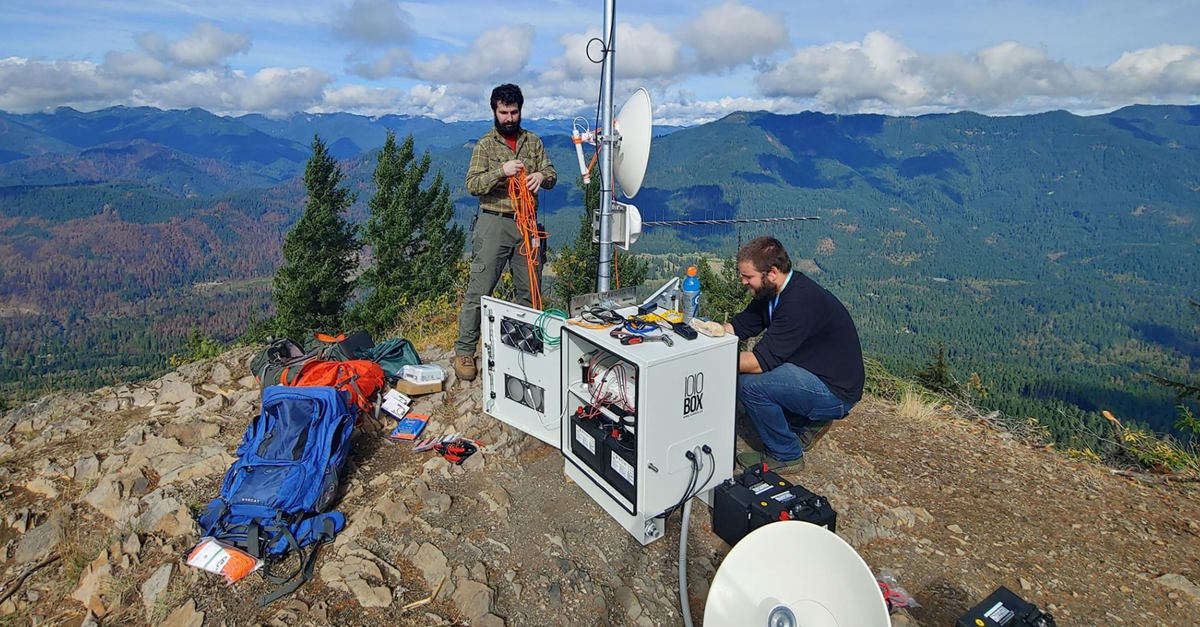
Geoff Turner, CEO of Elevate Technology Group, worked with community organizations and volunteers to build a microwave network across the mountains, creating wireless links to schools, churches, and community gathering areas. Parking lots became public Wi-Fi hubs where residents could reconnect with family members, access information, and continue work and schooling during the pandemic.
As Melanie Stanley, Chair of the Upper McKenzie Rural Fire Protection District, explains, those temporary connections became a lifeline for residents trying to stay informed and stay connected.
How traffic prioritization and automatic failover supported resilience
Recovery was only the first step. The longer-term goal was creating infrastructure capable of supporting emergency services, education, healthcare providers, and local residents during future crises.
To do that, Elevate Technology Group deployed Barracuda CloudGen Firewall and Barracuda SecureEdge solutions across schools, fire stations, clinics, and emergency operations sites. The technology helped secure networks while ensuring critical services received priority access to available bandwidth.
According to Geoff Turner, traffic shaping capabilities allowed the team to prioritize applications such as Microsoft 365, Zoom, and Google Workspace for students and emergency operations while limiting non-essential traffic when bandwidth was constrained. The deployment also included automatic failover between multiple internet connections, helping maintain service even when individual links failed.
The project also provided advanced security capabilities, including intrusion detection and prevention, policy-based access controls, secure VPN connectivity, and network segmentation for different user groups. These capabilities helped local organizations strengthen both resilience and security as recovery efforts progressed.
Supporting emergency communications through future disruptions
Since the 2020 wildfire, the region has faced additional wildfires, storms, and infrastructure challenges. Yet the communications foundation established through the partnership between Elevate Technology Group, Barracuda, and community leaders has continued to support critical services and keep people connected.
Today, the team is exploring additional ways to support first responders, including mobile connectivity solutions for fire trucks and ambulances that could provide secure communications in some of the most remote areas of the Cascade Mountains.
The broader lesson is that resilience is about more than technology. It is about ensuring communities can communicate, coordinate, and recover when they need it most.







Subscribe to the Barracuda Blog.
Sign up to receive threat spotlights, industry commentary, and more.