

Full visibility into XDR detection rules: From black box to trust
How Barracuda Managed XDR makes threat detection visible, explainable, and aligned to MITRE ATT&CK
Key takeaways
- Detection rule transparency builds trust and confidence with visible rules mapped to MITRE ATT&CK techniques.
- Transparency enables better security alignment and supports more informed decisions about where additional controls or integrations can strengthen security.
- Detection coverage is clear and auditable, and can be validated across the full attack surface.
Managed detection and response (MDR) services promise a lot: 24/7 monitoring, advanced threat detection and an elite team of Security Operations Center (SOC) analysts working behind the scenes to stop attacks. But for many organizations, managed service providers (MSPs) and partners, one question has always lingered:
What is the SOC actually looking for?
Until now, the answer was often high‑level. Customers were told that threats were being monitored across endpoints, networks, email, identities, and cloud services. Still, the specific detection logic and detection coverage were largely hidden from view. That opacity can make even the most capable managed detection and response (MDR) or extended detection and response (XDR) service feel like a black box.
Today, Barracuda Managed XDR takes a different approach.
Introducing detection rules visibility in Barracuda Managed XDR
The Barracuda Managed XDR dashboard now provides full visibility into the detection rules used by the solution and our global SOC across all integrations and across the complete attack surface, including endpoint, server, network, email, identity, and cloud.
From within the dashboard, customers and partners can now view every detection rule in one place. Included is the MITRE ATT&CK® technique associated with each rule as well as a clear description explaining what the rule is designed to detect.
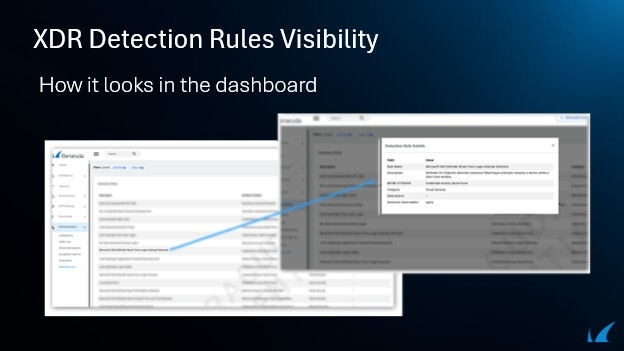
Figure 1. Drilling down on the detection rules
Importantly, all the rules are visible even if a specific integration is not enabled. As a result, all users get a comprehensive view of how Barracuda Managed XDR approaches threat detection across environments.
Why detection rule transparency matters
Trust is built on visibility, not promises
Security teams and MSPs are increasingly threat‑informed. Frameworks like MITRE ATT&CK are widely used to understand attacker behavior and map detection logic to known attack techniques, helping teams validate detection coverage.
By mapping every detection rule to MITRE ATT&CK and making those rules visible in the dashboard, Barracuda Managed XDR helps remove ambiguity. Customers need not rely solely on assurances that monitoring exists. Now they can see for themselves how detections align to real‑world attack techniques.
Coverage becomes explainable
Questions like “What threats and behaviors are covered?” “What is the SOC actually looking for?” and “How does detection align across all attack surfaces?” can now be answered directly, using the platform itself.
Instead of abstract descriptions of the existence of “advanced detection,” customers and partners can review the specific behaviors and techniques being monitored across different security layers. That clarity is especially valuable during security reviews, audits and renewal conversations.
Transparency supports better security conversations
Detection rules visibility also helps with aligning expectations. It creates a shared understanding between customers, partners, MSPs, and Barracuda’s SOC about what is being monitored and where additional controls or integrations may further strengthen coverage—turning detection coverage into something customers can see evolve over time.
What this looks like in practice
Within the Barracuda Managed XDR dashboard (refer to Figure 1 above), detection rules are presented in a structured, accessible way. Users can see the rule name, the coverage area (such as endpoint or cloud), the associated data source, and whether the rule is enabled for their environment. Clicking into a rule reveals additional detail, including the mapped MITRE ATT&CK technique and a description of the behavior being detected.
This makes the dashboard more than an operational console. With the detection rules, the dashboard becomes a source of insight into how the SOC monitors threats across attack surfaces.
A shift away from the “black box” model
Managed security services don’t have to be opaque to be effective. In fact, as buyers become more sophisticated, mature security services must provide transparency into how detection actually works, rather than just assurances that it exists.
Detection rules visibility reflects a broader philosophy behind Barracuda Managed XDR: security should be explainable, defensible and grounded in real‑world threat models. Making detection coverage visible helps customers better understand their protection and reinforces confidence in the service that’s operating on their behalf.
Learn more
Detection rules visibility is available now in the Barracuda Managed XDR dashboard. To see how it works or explore how detection coverage aligns to the MITRE ATT&CK framework across your environment, log in to the dashboard or contact your Barracuda representative for a walkthrough.






Subscribe to the Barracuda Blog.
Sign up to receive threat spotlights, industry commentary, and more.
